

Editor’s Note: I’m working on a few longer posts that aren’t ready yet, so in the meantime I wanted to share one of our more popular posts from a few years back when 95 percent of you hadn’t yet subscribed to Our Uncertain Future. If you’re one of the few that’s already read this one, please find a new epilogue at the end. More to come.
When I was a kid, my stepdad lost his job as a middle manager at Keuffel and Esser, a defunct company best known for making slide rules. As you may remember, slide rules were computers for dirt poor kids in the 1980s. I never really understood what the company did or what my stepdad’s job was there.
But suddenly, after playing the archetypal role of 20th century breadwinner for much of my young life, he was on the couch every day for several months. He was in his mid-fifties at the time and just a couple years removed from buying a house with my mother. There was a mortgage and a snotty stepkid. An early retirement was not in the cards.
My stepfather found another job as a data entry drone that he held for years, but he never fully recovered from the mid-life blow to his career and identity, although he rarely talked about it.
The last two decades of his life were relatively fine. He was a solid, dedicated dad and husband, but there were constant struggles, either with finances or his health, up until succumbing to a prolonged and excruciating deterioration from emphysema.
My teen years are a blur of trips to the hospital, learning about something called a colostomy bag, and all the different ways to transport and store oxygen.
Living with someone on oxygen is to be forever haunted by a chorus of unnatural sounds — loud whooshes of gas, rhythmic mechanical clicks, labored inhalations — that relentlessly remind of our ultimate frailty.
The closer my stepfather got to the end of his life, the more he was replaced by those sounds. During his last days in hospice they filled the room, the whole building.
Click. Then a faint rush of air followed by a weak inhalation. The cycle repeated endlessly. Until the moment it shifted to just a series of clicks and silence.
If I’m totally honest, part of the reason I’m here, writing about these strange lifestyle choices my wife and I have made recently is some anxiety that I’m approaching a mid-life crossroads similar to the one my stepfather faced when he was laid off.
I should say I’m objectively in a much better position than my stepfather was. I’m ten years younger, I finished college and I have a strong portfolio of two decades of work as a freelance journalist. And yet, I work at the intersection of three industries — media, tech and crypto — that have not had a great time of it over the past year. What’s more, the world is seemingly filled with much more uncertainty and existential anxiety than it was in the late 1980s.
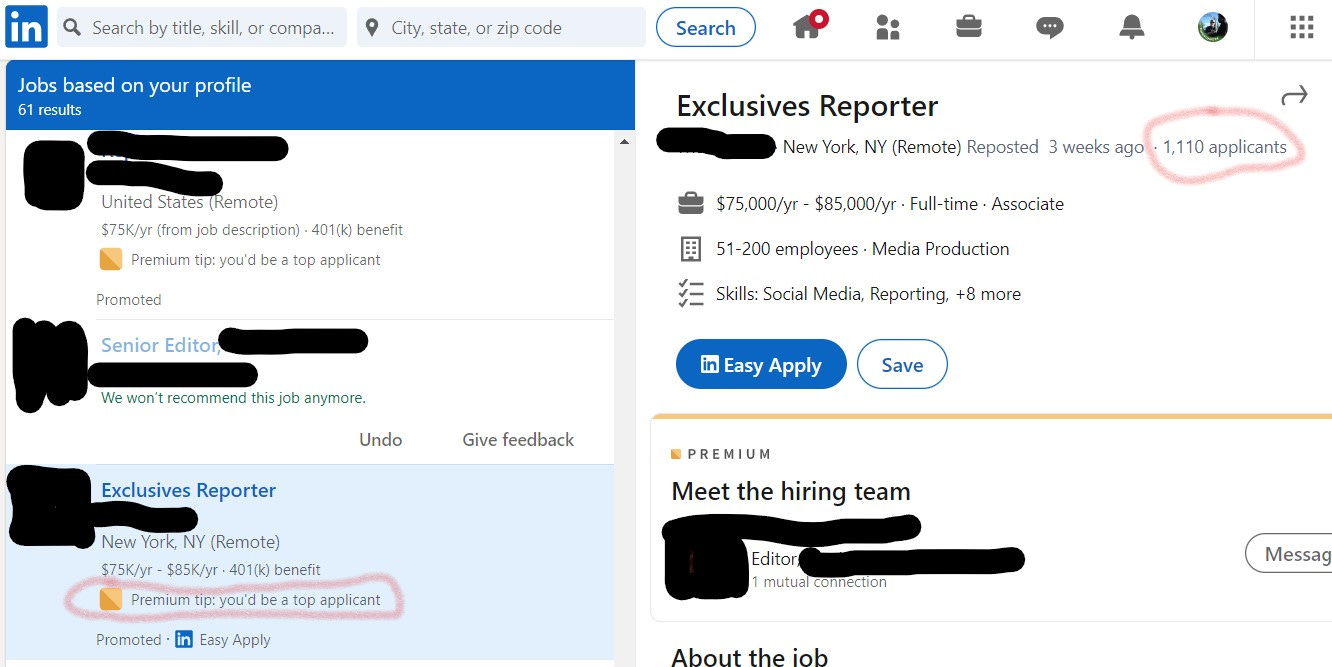
I’m not sure what’s worse, having to sort through Help Wanted ads and pound the pavement looking for jobs that don’t materialize as my stepdad did, or perusing an ocean of possible gigs on LinkedIn. The process may be simpler, but knowing that my “only” 85 percent skills match means there’s no chance any algorithm will surface my application from among the 800 other applicants to be seen by human eyes can drive the most resolute optimist to nihilism.
I’ve been thinking a lot about my stepfather this summer. How could he have known, the day before he was laid off, that day was his pinnacle?
This isn’t to say that his last two decades weren’t worthwhile, valuable and filled with great moments. One of my most treasured memories is coming around the bend in one of the few track races I won in high school. There was my stepdad, leaning against the fence at the edge of track, canula in nose, oxygen tank on hip, cheering me on. I’ve never run faster than I did that last 50 meters. We were both elated afterwards.
If he doesn’t get laid off in the late 80s, he’s likely at work that afternoon rather than at my track meet. Losing the best job he ever had was probably good for our relationship, and for me, really. But the flip side is that society and the economy never saw him as quite so valuable as he was before 1988.
This is the harsh reality I’ve been contemplating. For a number of reasons, I’m now a bit like a ten-year-old Kia or a middle manager in the late 1980s — not exactly in the highest demand.
Can I interest you in a gently used 44-year-old white dude from the suburbs? No? I can throw in a 15-year old collie who isn’t totally deaf and a 2005 Subaru Outback with some tastefully worn bumper stickers… Are you still there? You swiped left again, didn’t you? (Note from 2026: RIP to both the collie and the Subaru. One of you is missed much, much more than the other.)
The weird thing is that my ego tells me the world is wrong. I know I’m valuable. I’ve been working at this media game for a quarter century, amassing some truly unique experiences and insights.
And yet, this isn’t how value is determined. Your own opinion, or those of your family or your first dozen paid Substack subscribers don’t factor into the equation. Instead, it’s up to the rest of the wide world that so clearly doesn’t get it and is, frankly, just a little tired of your face.

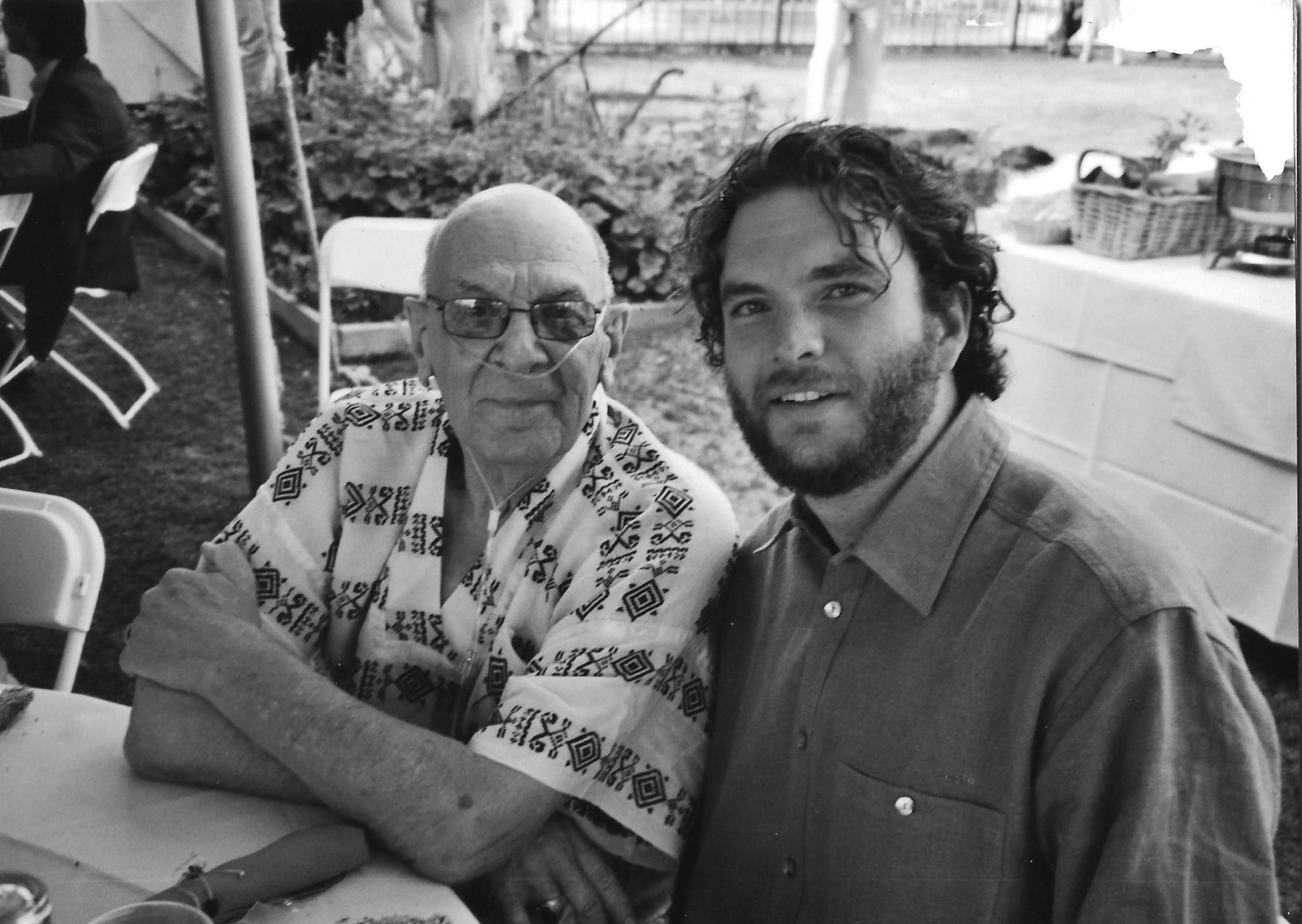
My stepfather used to spin fanciful stories from his younger days when he was a successful competitive square dancer. To hear him tell it, he was a sought after partner during this period, and often for more than dancing.
But society moved on from square dancing. It moved on from slide rules. It moved on from a man named Charles Henry that I called Chuck but thought of as Dad.
Now there’s a very real chance it’s moving on from me.
This doesn’t mean it’s all downhill and deterioration for me. It means I’m exploring new and more interesting areas where my value might be more appreciated. At the same time, I’m taking a hard look at the notion that the world is right and I’m not as valuable anymore as I’d still like to think.
Is the best use of my time on Earth to be yet another all-too-online writer tossing an endless stream of words into an already literally bottomless ocean of content?
I still think the answer is actually yes.
But, I could stand to up my game as a human at the same time. So I’ll be here, trying to figure out how to navigate a different kind of life off-grid, in pursuit of ever more independence, more decentralized systems and justice for all.
I also plan to make it to as many track meets as possible.
Epilogue from 2026: It’s been two and a half years since I wrote the above. At the time I was transitioning from nearly two decades as a full-time freelance journalist to a new career. I spent a year in a completely new role that I enjoyed and almost exactly 12 months after starting I was told I would be laid off during a major company “restructuring.” I was prepared to return to freelancing and I thought again about my stepfather and how grateful I was to have a feasible backup plan. I had even more gratitude for the new trajectory in our lifestyle and our ability to weather more rough times by living more minimally, independently and as debt-free as possible.
Within a few days my manager reached out to ask if I would be interested in a new role in another part of the company. She had called in a pretty big favor for me in the process with no real benefit to her. I guess sometimes people do look out for the 45-year-old white dude.
This new role has been arguably a better fit for me than the first one. Thinking back now on when I first wrote this essay and what’s happened since, I can see my ego has taken a healthy step back. This is likely from working as part of a team over the past few years without getting my byline attached to every little thing I write every day like I did for decades as a freelance journalist.
I also got something wrong about my stepdad. He never actually said that the day before he was laid off was his pinnacle. That’s my inference, based largely on the fact that I know his income never matched what he made at his old job ever again. And his health was nothing but downhill from that point, too, but that’s not unexpected.
He had many good years and great times, especially before the emphysema really got brutal in the end. He could even seem weirdly satisfied to my young, clueless eyes, considering what appeared to be the losing hand he had been dealt by the world. He used to tell me how he enjoyed making a sort of game out of the lower-paying order entry job he eventually found later in life. Being a self-obsessed teen at the time, this sounded painfully lame to me.
What it actually was, of course, was him performing dignity, as a verb. Maybe even hoping I might take the lesson. I guess I finally have.
I should report that I stopped going to track meets. Because my daughter switched to the mountain bike team. Each race was more than just a trip to the local track, it was a full weekend family adventure to a far-flung course. They were the absolute best. Chuck would have loved them.
Great piece, and actually also a functional prompt for us middle aged writer readers.
What a beautiful piece of writing, Eric.
While I’m not close to that mid-life mark yet, I’ve been thinking a lot about how to understand and translate my value when my career hasn’t exactly followed a linear path. Reading your words makes me feel I don’t need to fret too much and the answer will come to me. Maybe my ego needs to step back too.
Ps: hi. So nice to encounter a familiar face here :)