
Throw Away Your Clocks and Follow the Moon
Discover the ease of cyclical time

Daylight Savings Time shuffles my body around, trips up my inner clock. My morning light suddenly becomes dim evening light. My evenings are suddenly loud and gloriously flaming into night. How ridiculous that we treat time like this, as something to play with to suit our outdated agendas? While we are captive to the world of clocks to set our watches, calendars and schedules by, though our own bodily rhythms push against these constructs, I remind myself that despite it all, time is not linear.
Time is Not Linear
Standing at the edge of the ocean, I am soothed by the infinite repetition of waves roaring and colliding against the sand. In an hour, the foam fingers of the swells will be high enough to reach the legs of my beach chair. In a few hours more, they will recede again, leaving a line of shells and seaweed along the shore. This cycle will begin again in a few hours, thanks to the gravitational pull of the moon.

The tide reminds me that time is not linear. Our society operates on linear time. We perceive time as having a beginning and an end. We are born at point A and we exist until we die at point B. The years tick by in chronological order, one after the other on a straight path into the future. Our own years accumulate in the same way, each year adding another number to our age, always proceeding forward to our final destination.
When we perceive time as linear, we expect progress to be constant and so pressure is applied on us to advance. Starting over is considered moving backwards in linear time. To start over is to “lose time.” Even rest, relaxation or resignation can be thought of as “lost time” because they are the antithesis of linear time, which requires a constant forward motion. Waiting for something to happen is considered “wasting time” because we consider time without action to be a waste.
Nature Lives in Cyclical Time
In nature, time is cyclical. A multitude of cycles layered together, causing spirals of time. There is the cycle of a day from sunset to sunset, of a month from new moon to new moon, of seasons from springtime to springtime and of lifetimes from birth to death to rebirth.
Each season of the solar cycle, trees lose their leaves, grow new ones, until those brown, and release again. Each lunar cycle affects the direction the sap flows in the tree and the amount of growth it receives in a week. When a tree falls, it becomes a nurse log that creates the perfect environment for new life to grow. When one cycle ends, another begins
Consider how our body’s cells are constantly replicating and replacing themselves. Some parts of the body are renewed more frequently than others, but over time all the cells in our body are different than the ones we were born with. This cycle occurs within a multitude of cycles like the solar years and life cycle of our body. Age is not linear, but cyclical or more specifically a spiral.

Time is a Wheel
In many Indian traditions, time is understood as cyclical, through kālachakra, the “wheel of time,” in which creation and dissolution continually turn and return. As a wheel, there is no single beginning or final end, only ongoing turning. The various cycles, such as cosmic, earthly and inner seasons, overlay with one another, the pattern repeats, but the details and conditions shift, so the wheel of time holds both recurrence and change, just as natural cycles spiral back around but never in the same way. “In essence, the Kalachakra view maps the macrocosm and microcosm onto one another…The movements of stars and the movements of our breath mirror each other in a profound correspondence. Thus, the cosmos and the individual are nondual and mutually pervasive, intimately interconnected and influencing each other,” writes Luis Gallardo in his essay, Turning the Wheel of Time. Just as the cycles of the moons affect the cycles of the ocean. Just as the circadian rhythms of the sun affect the cycles of sleep in our bodies. Everything is interconnected, turning simultaneously inward and outward, in cyclical time.
Healing Happens in Cycles
Consider the healing process. When we function in linear time then anytime we have a setback in our healing process, we feel defeated because we should be progressively getting better, otherwise we are failing to heal. Also, we feel like at this moment we should be in optimal health instead of understanding the cyclical nature of our body, which is not an upward climb to constant improvement, but an ever-evolving state of being.
“If time is a line, as western thinking presumes, we might think this is a unique moment for which we have to devise a solution that enables that line to continue. If time is a circle, as the Indigenous worldview presumes, the knowledge we need is already within the circle; we just have to remember it to find it again and let it teach us,” Robin Wall Kimmerer writes in her essay, Ancient Green. In cyclical time, when our healing is delayed, we are given another opportunity to get better, to reevaluate what worked and what didn’t work with more wisdom, instead of feeling shame or disappointment. Our expectations are more realistic. We understand that our standards for health must shift with the shifts in our body and environment, such as hormones, sunlight hours and climate. This example can be applied to creativity, work, relationships, and many aspects of your life.
In cyclical time, we are able to repeat old patterns graciously, understanding that though the pattern may repeat, we are never the same twice. Though I may have made the same mistake twice, I did it differently this time. I did not fail to learn, I am still learning.
Cycles Embrace Uncertainty
Water molecules of the ocean evaporate into vapor and rise to the sky where they accumulate into clouds and rain down to return to the ocean. Each moment on this cyclical path the water transforms, and while the pattern is well-trodden, repeated in multitudes, each time the cycle is performed, the ways in which the pattern plays out changes. The cloud is unique and the ocean has shifted. As the saying goes, you never stand in the same river twice. The beauty of cyclical time is that not only are we moving in spirals, but the spiral is also always changing. The results are always uncertain and mysterious.
This is counter to chronological linear time in which there is no room for mystery, the movement is always forward and the results are always progress. Linear time is unnatural and a social construct. If we consider time as cyclical instead, then each moment is an opportunity to start again and with a fresh new perspective.
Time is on Your Side
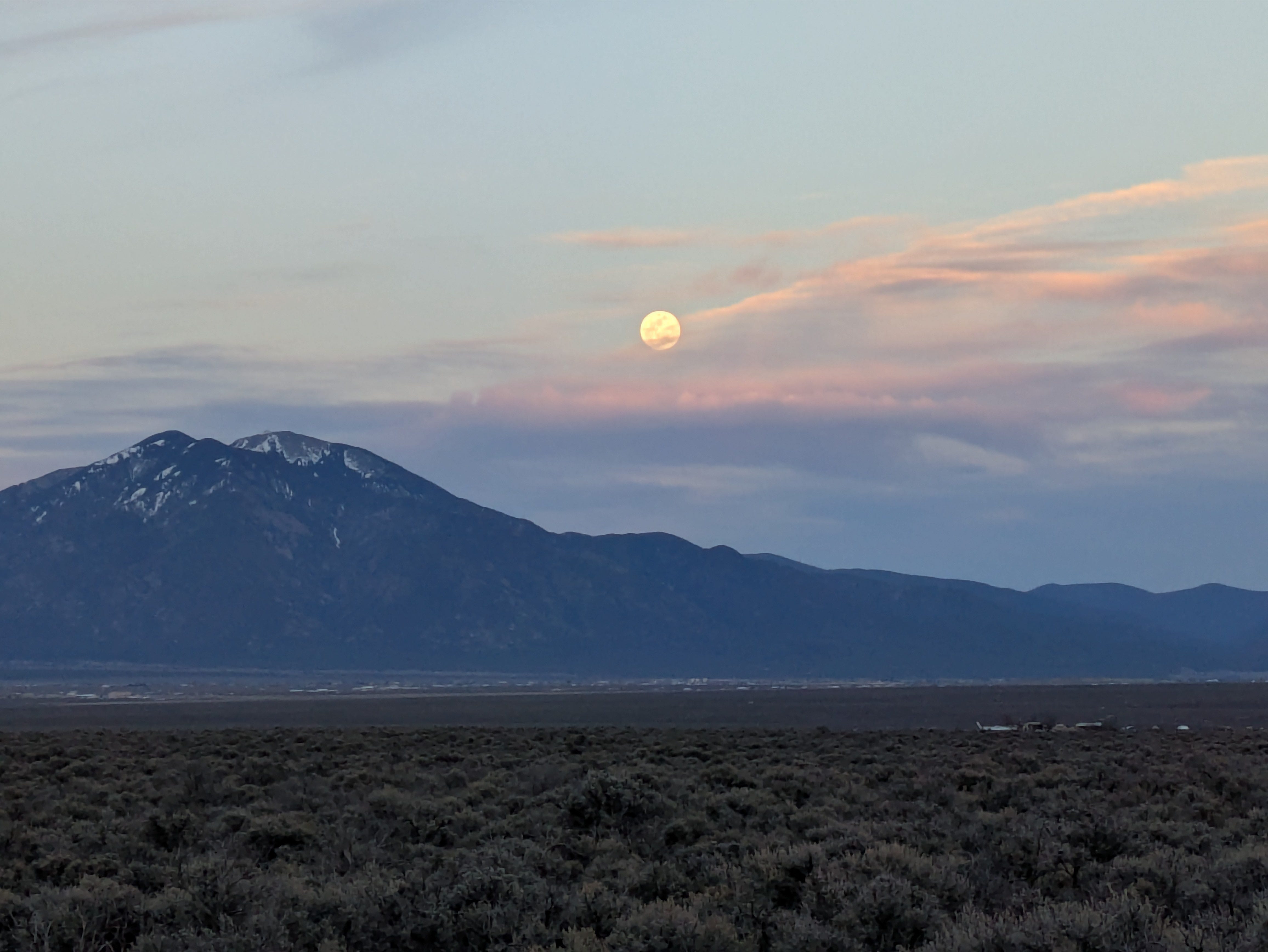
By applying cyclical time, we can release what no longer serves us when we have evolved out of it without feeling like we are inconsistent, flaky, or unreliable. Cyclical time allows us to start fresh whenever “the time” feels right to do so. You can never “lose time.” Cycles are happening every moment, every day, every year. Allow yourself to be guided by the natural energy cycles within you of movement and rest, solitude and socialization, creative outbursts and fallow times. By recognizing and acknowledging these cycles, we can flow more easily, slowly, and naturally, like the ebb and rise of the tide, the trough and crest of the wave, the turning face of the moon
Are You Ready to Discover Your Cyclical Rhythm?
If this topic resonates with you and you want to learn more about how to embrace cyclical time in your daily, monthly, seasonal, yearly, and lifetime spirals, I’ve included a list of 9 ways to practice cyclical time. These practices can help you slow down and find more ease with your own natural rhythms. This list is a compendium of life experience, nature‑based trainings, and research, and is available to paid subscribers only.
How to Discover and Practice Cyclical Time:
Here are nine simple ways to discover and practice your own cyclical time so you can slow down, listen to your body, and reconnect with the natural rhythms supporting your life. Start by choosing one or two practices that feel most alive for you right now. Let them move in cycles too, releasing any practice that no longer fits and beginning a new one when the season of your life changes.
Keep reading with a 7-day free trial
Subscribe to Our Uncertain Future to keep reading this post and get 7 days of free access to the full post archives.